Seitenverzeichnis

Site map e-mail
Basenjis in ancient Egypt
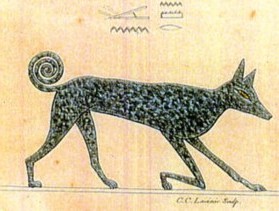
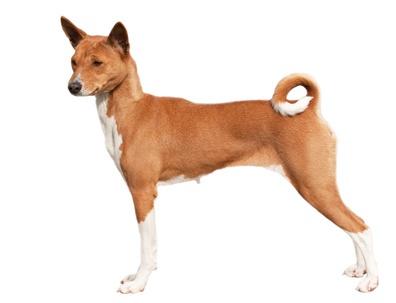
The old Egyptians probably were the first Basenji breeders. Basenjis were much loved family dogs that are recognizable in many depictions probably they are comparable to the ancient Tjesem. https://de.wikipedia.org/wiki/Tjesem
Basenjis also frequently depicted with bells on their collar. This practice still exist today in Africa.
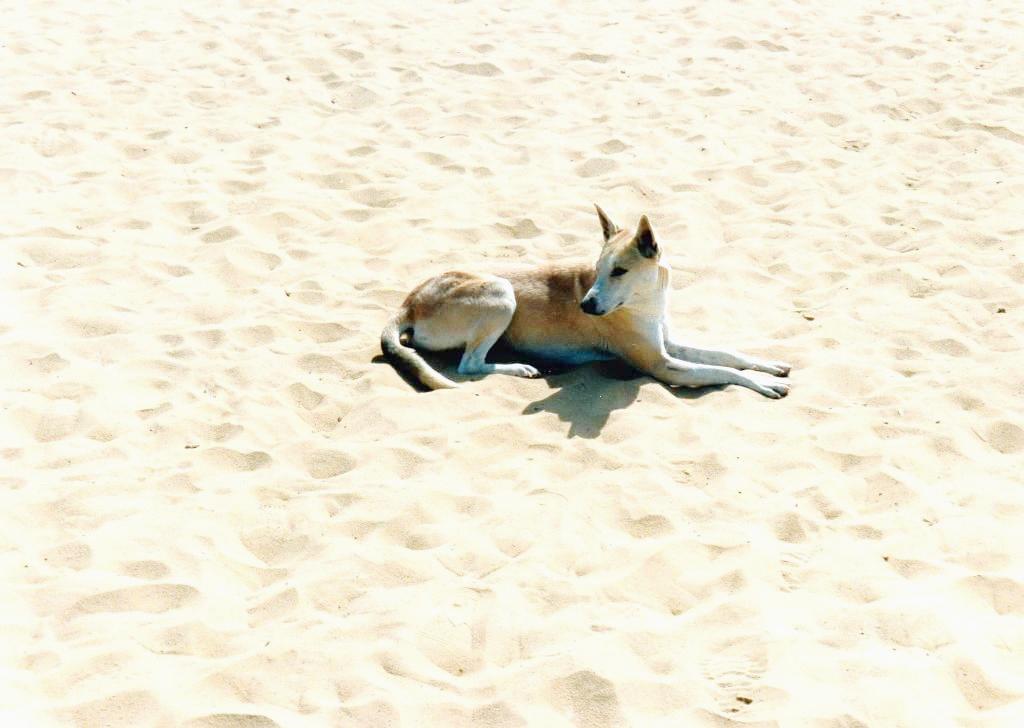
Basenji type dog, is it the Tjesem of Old Egypt?
Bilderwelten und Weltbilder der Pharaonen Philipp v. Zabern Vlg.
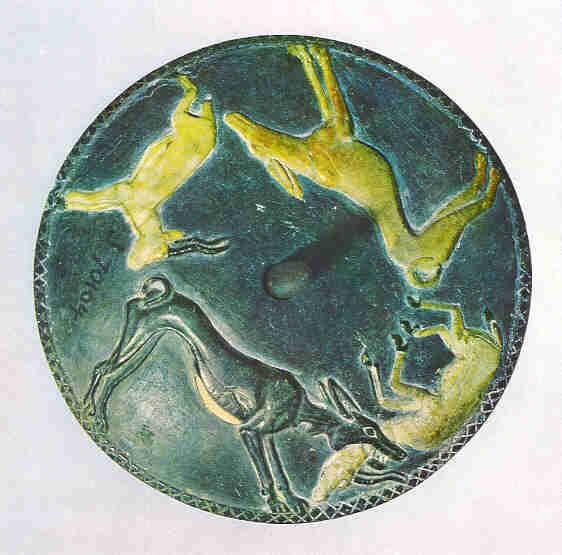
Shield inlaid with colored Alabaster.
Dogs hunt gazelles.Hemaka's tomb, Saqqara 1. Dynasty 3000 - 2800 BC
curtesy museum cairo
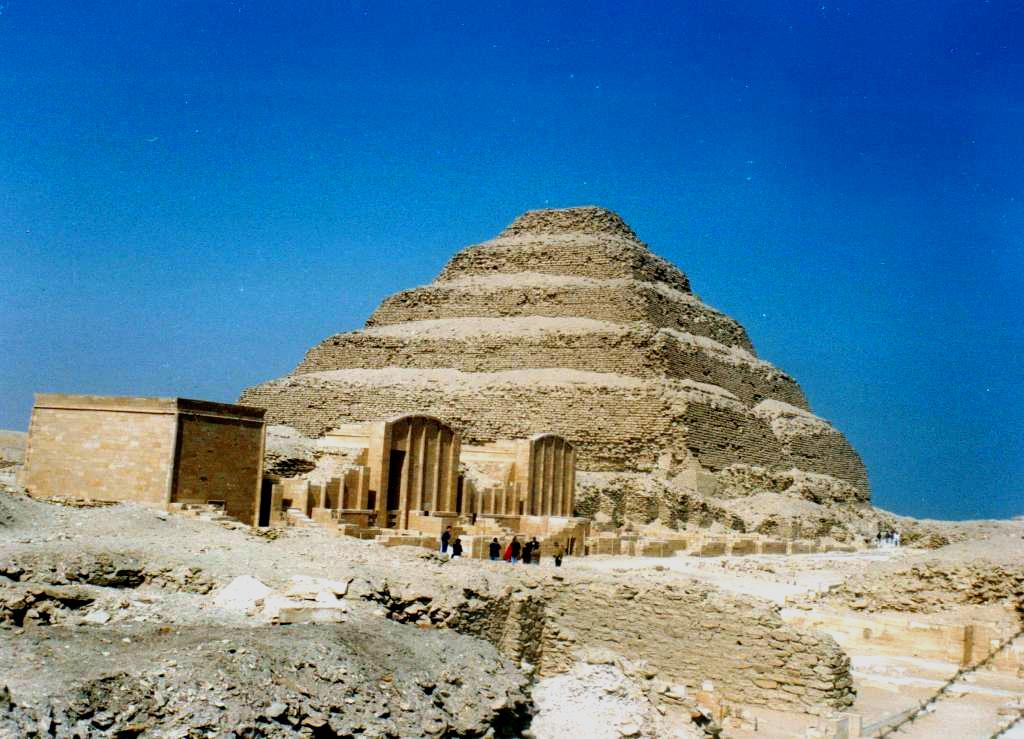
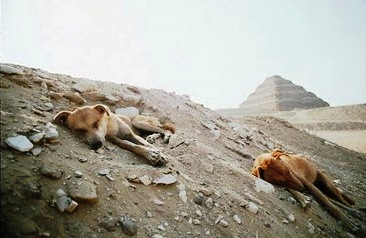
Depictions of typical Basenji dogs in Ancient Egypt were found in the graves of the great pyramid of Khufu (Cheop), built approximately 2700 BC in the IVth Dynasty.
to 2400 BC depicts a Basenji type dog. One can find similar dogs today there.A relief in the grave of Meruka Saqqarah dating
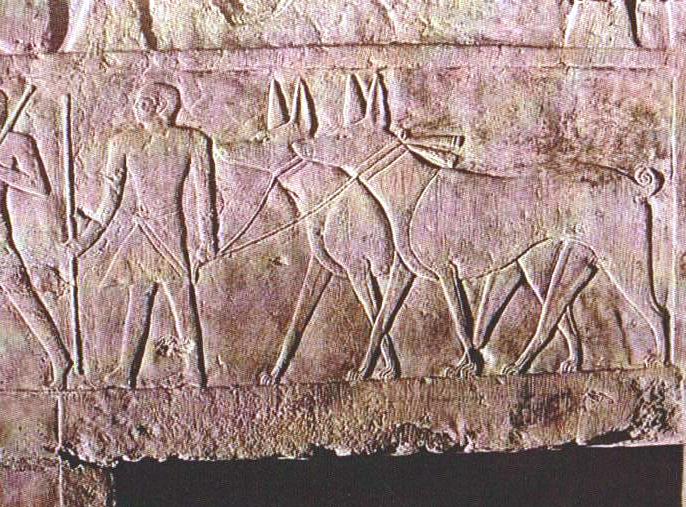
Saqqarah Schensi Dogpicture 1987
© ub
Saqqarah Schensi Dogs picture of the Internet
A basenji-resembling dog is to be seen depicted at the feet of his master on a gravestone of Sebeh - aa from 2300 BC.
A written document "(king letter)
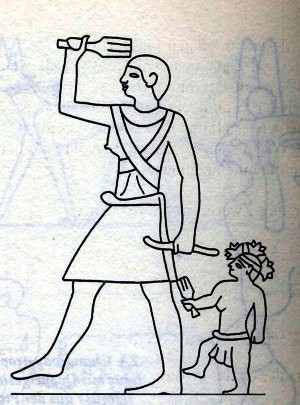
Königsbriefe des Alten Reiches, (Urk. I, 128, 3-131,7) S. 154-155, in: H. Altenmüller und D. Wildung, Studien zur altägyptischen Kultur, Bd. 18, Hamburg 1992 " from the 6th dynasty of Pharao Pepi II tells about the transport of a dwarf and the instructions by the expedition leader to pay close attention to the dwarf so nothing happens to him during the journey. The pygmies as divine dancers were held in high cultic esteem for the pharaohs.In one travel diary of the only female pharaoh Hatschepsut 1490 - 1468 BC can mention found about dogs that were brought along from the country Punt, the Somalia of today. Were those dogs Basenjis? The description may be right.
First Africa researchers Africa researchers brought knowledge about Basenjis.
Egyptian woman and dancing dwarf Relief of the Seneb tomb
Dwarf with dog
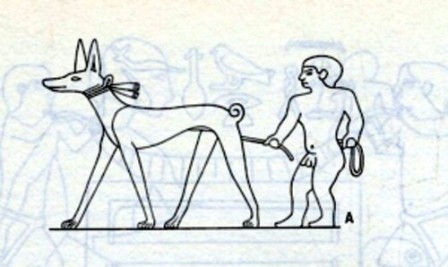
Fotos Armin Heymer Die Pygmäen
A drawing of a Tesem
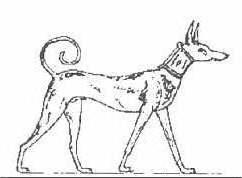
Chatsworth House Derbyshire chatsworth.org/
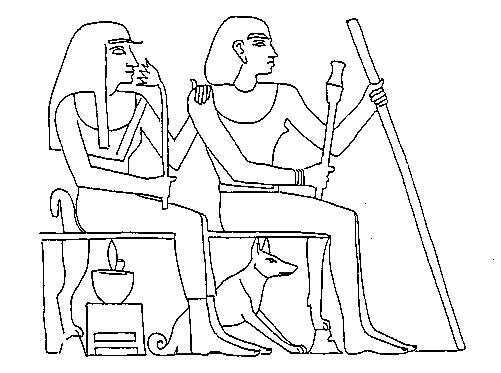
A limestone stele dating 1900 BC shows
Renu and Dedet
A Basenji Type dog sitting under the chair.
Egyptians, a dwarf and 2 Basenjis on the lash
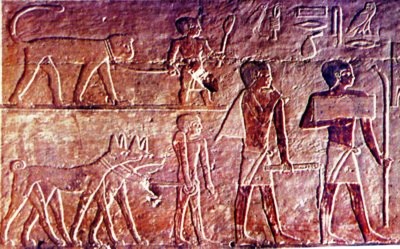
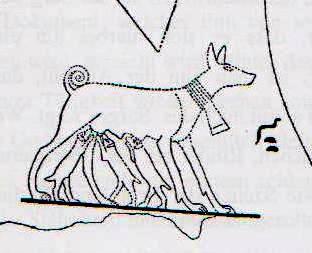
Basenji mother and 3 puppies
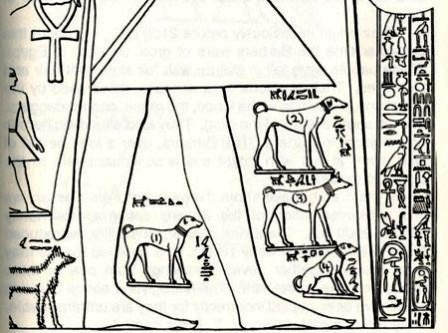
On a stone carving from Pharaoh Antefaa II, approximately 2000 BC, four dogs were shown. One of them has Basenji characteristics.
Nr. 3 Basenji Type dog
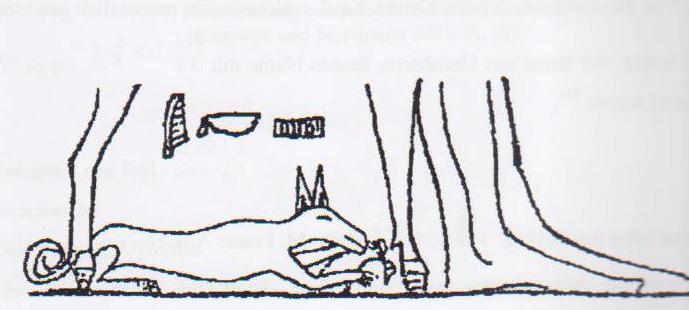
Even in old Egypt Basenjis seem to have chewed up things
Tomb of Nika-Anch
Limestone stele Approx. 1600 BC Museum Louvre
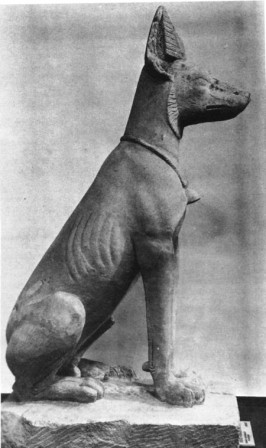
Basenji type dog with a kind of Bell Collar
A small limestone Basenji sculpture, dating 1080 to 332 BC
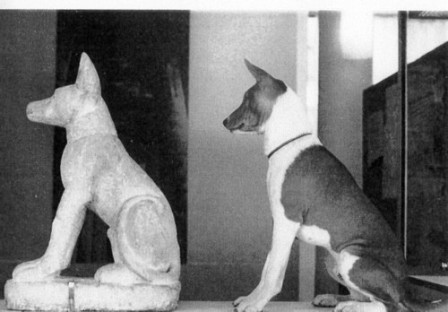
Pergamon Museum in Berlin
May be a Basenji with a duck ?
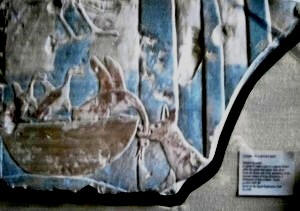
Courtesy Fitzwilliam Museum Cambridge
In the museum of Cairo there are mummies of Basenji size. There and in many other museums you will find faience and wooden models, which are very similar to Basenji Type dogs found in tombs.
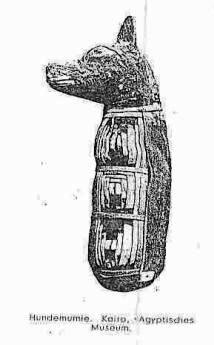
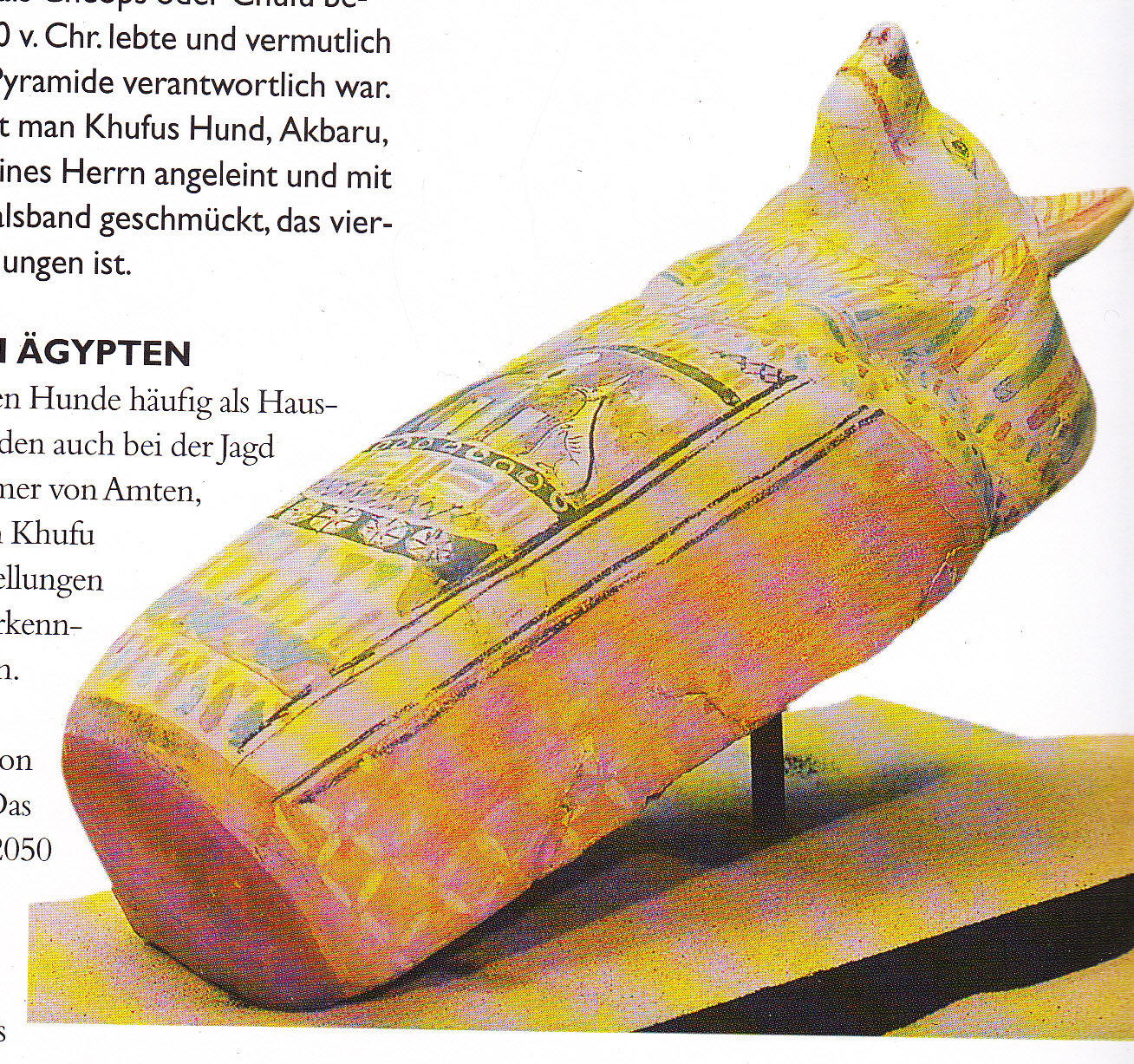
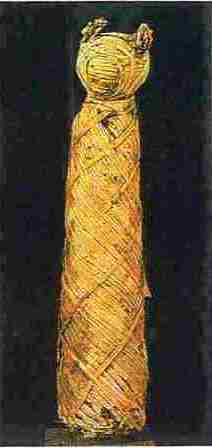
Picture dog mumie (Dogs: Juliette Cunlife)
A Tjesem / Basenji?
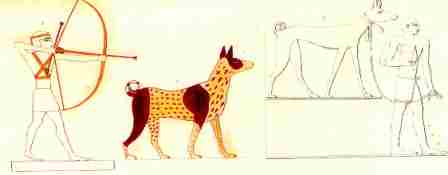
Bilderwelten und Weltbilder der phraonen: Philipp von Zabern Vlg.
Taf. XVI - XVII Drawings in Beni - Hassan, Kom el - Ahman and Theben
Beloved Pets
Dog in the end time of the pharaohs
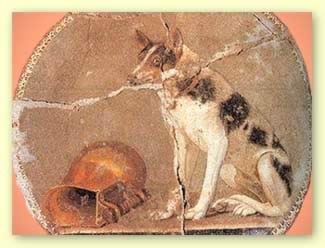
Bibliotheca Alexandrian Mosaic Hellenistic Period
Statues and other depictions of dogs were found in other structures erected by the pharaohs and wealthy Egyptians.
Some dog models like Basenjis are painted red and white
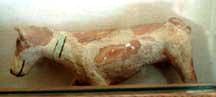
Museum Cairo
Near Cairo a cemetery for animals is discovered in 2001 who was established 2,300 years ago. Egyptians used to mummify nearly all animals. In former times archeologists discovered other animal cemeteries and they found dog mummies. They found once more dog skeletons and mummies.
Grave of a woman, beneath a dog grave
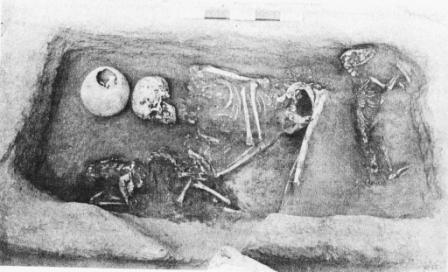
Ph
oto Courtesy American research center Egypt
We assume that Basenjis as catlike dogs were in high esteem. The first dog names were documented in Ancient Egypt. Names: BaHaakaa, Mahut, Xalmes, Salekai, Xabesu, Akena etc.